A strong Puma Jobs application starts long before the first click on an apply button. Brand fit, role match, and clear proof of skills matter a lot when a company hires for both customer-facing retail work and creative product roles.
Founded in Germany in 1948, PUMA has grown into a global sports brand with operations in more than 120 countries and more than 20,000 employees worldwide, according to the company’s corporate materials.



A worldwide audience usually sees the same core pattern: online application, profile setup, screening, interview rounds, then role-specific evaluation.
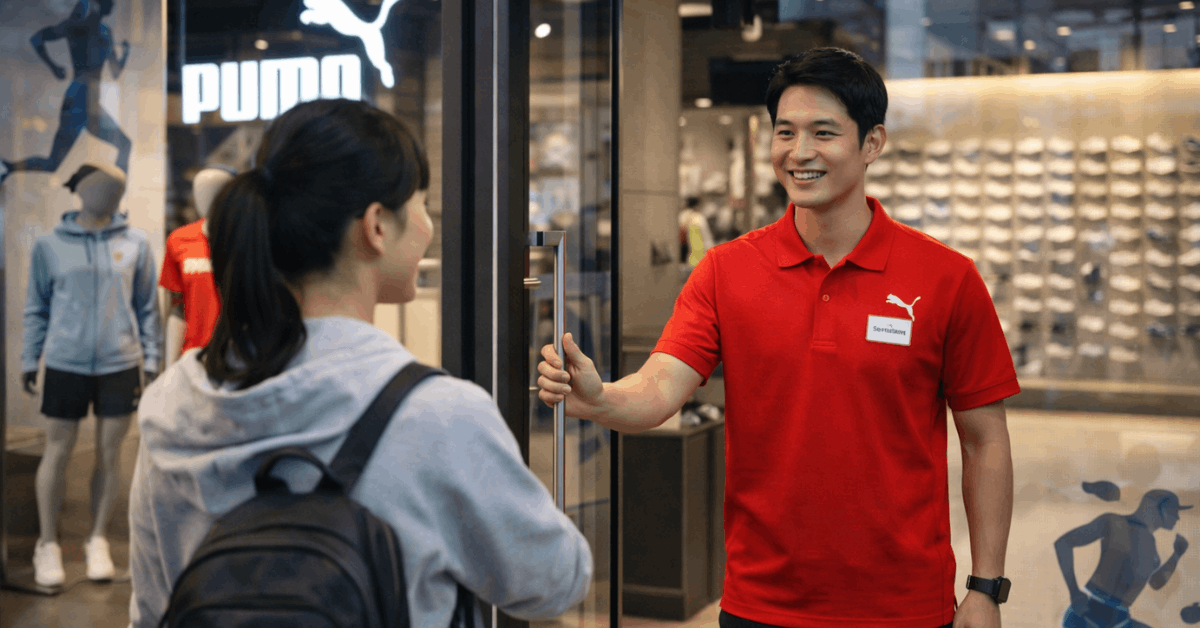
Why PUMA Appeals To Retail and Creative Candidates
PUMA sells footwear, apparel, and accessories across performance sport and lifestyle categories, which means store teams and design teams both influence the customer experience.
A strong match often comes from people who enjoy fast-moving environments, collaborate well, and can explain how their work improves sales, design quality, or brand relevance.
PUMA positions itself around “Speed and Spirit,” a company idea linked to founder Rudolf Dassler and still used heavily in recruitment messaging. Four values support that culture:
- Be Driven,
- Be Vibrant,
- Be Together, and
- Be You.
Those phrases may sound like branding at first, yet they matter during hiring because recruiters use them to judge how well a candidate will work inside the business.
English also matters. PUMA states on its official application pages that English is the corporate language, so applicants for international roles should expect English resumes, English interviews, or both.
Retail and Design Paths At PUMA
Retail and design sit in very different parts of the company, even though both support the same brand promise. Store roles focus on service, selling, product presentation, and daily execution. Creative roles focus on concept work, technical development, trend analysis, and collaboration with product teams.
A lot of candidates make the mistake of applying to both tracks with the same resume. Hiring teams usually spot that immediately. Stronger applicants tailor each document to the job family, the responsibilities, and the value they can add.
Retail Roles Usually Center On Service and Sales
Most Puma retail jobs are easier to access than corporate or design openings, especially for candidates building early experience. Common roles include sales associate, senior sales associate, supervisor, assistant manager, and store manager.
A Puma sales associate usually handles customer questions, product recommendations, fitting support, checkout, returns, replenishment, and visual standards on the shop floor.
A Puma store manager carries broader responsibility, including staffing, sales targets, coaching, compliance, stock flow, and overall store performance. Retail applicants stand out when they can show measurable results, such as conversion improvement, upselling, loss prevention support, or consistent customer service scores.
Design Roles Require Creative Depth and Technical Judgment
Candidates aiming for Puma design jobs face a more specialized process. Footwear, apparel, graphic, and product design roles often ask for a relevant degree or equivalent experience, plus strong software skills and a portfolio that proves both taste and execution.
Design teams do more than sketch attractive products. Material choices, performance needs, consumer trends, production realities, and brand direction all shape the final outcome. A strong Puma portfolio usually shows concept thinking, iteration, technical awareness, and clean presentation instead of only polished final images.
What Recruiters Tend To Look For
PUMA’s own hiring guidance keeps repeating a few themes: passion, motivation, skillset, team spirit, and a clear sense of potential impact. That last part matters more than many applicants realize. Recruiters often respond better to specific value than to broad enthusiasm.
Retail candidates should show customer focus, product communication, time management, sales awareness, and calm execution during busy hours. Design candidates should show visual thinking, software fluency, market awareness, collaboration, and attention to detail.
Company culture also plays a role. PUMA describes itself as diverse and international, and current job pages stress that applications are reviewed by real people rather than fully automated decision systems. That means vague buzzwords can hurt more than help, because a human reviewer can tell when a resume says a lot without proving much.
How The Application Process Usually Works
The Puma hiring process is fairly straightforward on paper, though timing can vary by team, country, and hiring volume. Most applicants move through the same basic structure, then hit role-specific steps after screening. Retail hiring can move faster than design hiring, especially when stores need immediate coverage.
Patience helps here. PUMA’s own recruiting notes mention that the company moves fast but can also get busy. Strong preparation matters because a delayed response does not always mean a rejection.
- Search Roles On The Official Platform: Most candidates start on the Puma careers website, where openings can be filtered by country, department, and location. New vacancies are added regularly, so repeated checking makes sense if the right role is not live yet.
- Create A Candidate Profile and Apply Online: Resume upload, contact details, work history, and education usually sit inside one digital profile. Design applicants should prepare portfolio links or files in a format that loads cleanly on desktop and mobile.
- Prepare for Screening and Interviews: Retail candidates may get a phone, virtual, or in-store interview. Design candidates may face multiple rounds, including portfolio discussion, stakeholder interviews, and practical questions about the process.
- Respond Clearly And Professionally: Scheduling, follow-up emails, and document requests still shape recruiter impressions. Fast, accurate replies signal reliability, which matters in both store operations and cross-functional creative work.

Interview and Portfolio Moves That Help
Interview quality often decides the outcome when several candidates have similar experience. PUMA’s own prompts already hint at what matters: why this role, why PUMA, what makes the candidate unique, and what success at the company looks like.
A few Puma interview tips can make those questions easier to handle without sounding rehearsed.
Brand knowledge should feel practical, not performative. Store candidates should know key product categories, target shoppers, and recent campaigns or collaborations. Design candidates should know how PUMA balances sport performance with fashion relevance and how that tension influences product storytelling.
Retail Interviews Reward Specific Examples
Retail interview answers work best when they stay concrete. Strong examples include handling a difficult return, recovering a sale after a hesitation point, keeping standards high during peak traffic, or helping a team hit store targets.
Numbers help when available, though clean storytelling matters more than forced metrics.
Dress can stay polished without becoming overly formal. PUMA’s own guidance notes a casual brand culture, so a stiff corporate look may feel less aligned than a smart, clean, brand-aware presentation.
Design Interviews Need Process, Not Only Taste
Design interviews usually fall apart when candidates show finished work without explaining how decisions were made. Hiring teams want to see problem-solving, revision logic, consumer awareness, and collaboration with developers or marketers.
Portfolio structure matters too. Start with the strongest projects, label the role played in each one, and explain the brief, constraints, iteration, and final outcome. Creative talent opens the door, but decision-making keeps it open.
Pay, Benefits, and Long-Term Growth
Pay varies widely by country, seniority, contract type, and business function, so fixed global numbers can mislead more than help.
Public market estimates often place store-level roles in hourly or entry salary bands, while experienced design and product roles can move significantly higher. Local listings and regional salary data remain the best checkpoint once a target country is clear.
PUMA commonly highlights:
- employee discounts,
- development opportunities,
- training, and a
- collaborative internal culture.
Full-time packages in many markets may also include health coverage, paid leave, retirement support, or performance-linked incentives, though exact terms depend on local employment structures.
Career progression is realistic for candidates who perform well. Retail staff can move into supervisory or management tracks, while designers can grow into senior, category, or creative leadership roles. Internal development appears regularly in company materials, and that matters for candidates looking beyond a first job offer.
Final Take
A strong Puma Jobs application works best when it matches the company’s pace, values, and role expectations without copying brand language too hard. Retail applicants need proof of customer service, selling ability, and floor execution.
Design applicants need portfolio quality, process clarity, and a clear understanding of how product ideas become a commercial reality. Preparation still makes the biggest difference. Role-specific resumes, practical interview answers, clean English communication, and a realistic view of the job can move an application from overlooked to competitive.
PUMA hires across a wide global network, so the right opening may take some patience, though a well-prepared candidate has a far better shot when it appears.